The world watched last September as millions mourned the death of Queen Elizabeth. Subsequently, many watched with great interest as Charles was enthroned as...
Author:
Author:
Author:
Author:
Author:
Author:
[In part 1 of this lecture, I sketched Albert Outler’s significance and legacy, and in part 2 I discussed challenges posed to Outler’s contributions.]
I want now to move from these challenges to Outler’s proposals — still insisting that these are not fully settled questions, and that the full import of his legacy is still open before us — and turn now to a brief exploration of what challenges he may yet have for us.
There is enough material here to launch several more lectures, but let me just offer a few brief suggestions to show that we are not through with Albert Outler. He has yet more to teach us. Here are snapshots of three avenues for exploration.
First, in spite of whatever criticisms we might make of his views of theological pluralism, he posed a question for Methodists that is still on our agenda: Do Methodists have a doctrine of the church? His essay with that title came out of the 1962 Oxford Institute on Methodist Theological Studies where he made the claim that Methodism “was really designed to function best within an encompassing environment of catholicity.” It arose, not as an independent church but as “an effort to meet an emergency situation, with needful extraordinary measures.” Therefore, “we need a catholic church within which to function as a proper evangelical order of witness and worship, discipline and nurture” (quotations from The Wesleyan Theological Heritage, 225, 226).
The burden of Outler’s ecumenical ventures in the decades after that was to find what that “environment of catholicity” might entail. Fifty years after he raised this question, it is heartening to see how it was taken up recently in the journal Ecclesiology (vol. 9 [2013]) where the editor, Geoffrey Wainwright, and authors Justus Hunter and Robert Martin respond in fresh ways to the challenges presented by Outler’s original question. And thus, the challenge for us from Outler still remains: Will we answer his question fruitfully?
A second avenue for pursuing Outler’s continued influence and legacy is his work on Wesley’s Trinitarian pneumatology. A number of scholars have already begun work in this area. Vickers called attention to this as the most “notable” of the “theologically more substantive aspects of Outler’s work,” and suggested that “follow[ing] Outler’s lead” here can help Wesleyan theologians not only to think more systematically about the nature and work of the Holy Spirit, but to see the “imminently practical” character of Wesley’s Trinitarian reflection. Even further, he suggests that some of the problems in Outler’s perspectives on Q, and theological methodology and epistemology could find clues to their resolution in a more developed doctrine of the Spirit’s role in the awakening of the “spiritual senses” (“Albert Outler, 63-64).
The final challenge I want to lay before you is what Outler still has to say to pastors. Why should you keep reading him if you are not a Methodist historian or Wesley scholar? What would an engagement with Outler beyond seminary look like?
As a young pastor I was first drawn to reading Outler when I learned from him that John Wesley might be a different kind of theological mentor than the ones I read in seminary. And I was drawn even closer to Outler when he described himself as a “theological general practitioner.” This notion of being a theological GP kept me grounded, I believe, in my whole pastoral career and on into teaching, constantly looking for the relation between my theological studies and the daily work and demands of pastoral ministry.
You probably read some Outler in seminary somewhere in your history, doctrine, and polity courses. He seems to be required reading on Wesley and on Q. My question is whether he has remained as a conversation partner. I’m convinced that readings in seminary classes on Methodist history and doctrine need to be supplemented by a deeper engagement with Outler if pastors are not to be caught in the traps of platitudes and superficial appropriations of him that lead to “dilettante” performances of the Methodist tradition.
A key question for his legacy, then, is how Outler may continue to be our teacher. As I end this lecture, then, let me sketch some reading assignments for you – possible ways to pursue the rich resources for growth still available in reading Outler.
You might begin with a short essay he wrote in 1988: “The Pastor as Theologian” (in The Pastor as Theologian, ed. Earl E. Shelp and Ronald H. Sunderland [Pilgrim], 1988), 11-29). Let that serve as an invitation to get reacquainted.
A second approach might be to read his several essays on the Holy Spirit, especially the ecumenical working paper he wrote for the World Council of Churches in 1989 shortly before his death: “Pneumatology as an Ecumenical Frontier” (Ecumenical Review 41 (1989): 363-74); also in The Ecumenical Theologian: Essays by Albert Cook Outler, ed. Leicester R. Longden, vol. 7 in The Albert Outler Library [Bristol, 2001], 277-93. Other key essays by Outler on the Holy Spirit include “Veni, Creator Spiritus: The Doctrine of the Holy Spirit,” in New Theology, no. 4, ed. M. Marty and D. Peerman [Macmillan, 1967]; “A Focus on the Holy Spirit: Spirit and Spirituality in John Wesley,” in The Wesleyan Theological Heritage, 159-73). Look at his accounts of Wesley’s Trinitarian pneumatology, and test for yourself whether a conversation between you, Outler, and Wesley opens up a new and practical awareness of the work of the Holy Spirit.
A third reading assignment might be to dip into the collected lectures and essays and sermons in the Albert Outler Library edited by Bob Parrott. Whether your passions are in evangelism, pastoral care, Patristics, or ecumenical theology, there are multiple entry points to draw you into fruitful engagement with his work. One volume I would highlight is the collected lectures on Christology (vol. 4, ed. Tom Oden). Many United Methodists know him only for his work on Wesley or ecumenism, but throughout his career he was lauded as a brilliant lecturer, who in at least a dozen major university lectureships returned again and again to the key issues of Christology in the context of their historical development. This was one of those unfinished projects he never brought to publication. I encourage you to test the depth and breadth of the Christology you first developed in seminary by letting Outler take you deeper in and higher up.
The only warning I would offer with these reading assignments is that you take care not to mistake Outler himself for the object of his vocation. There is always a tendency, if not temptation, to get caught up in Outler’s brilliance and breadth.
The ultimate question for us all is this: Are we actively receiving the legacy-gift Outler makes available in our tradition? Legacies, after all, have to be unwrapped and put to use. And given both the challenges made to his work, and the challenges he makes to us, and not forgetting the invaluable resources now available through the Bridwell Archives, the legacy of Albert Cook Outler is ripe for new appropriation.
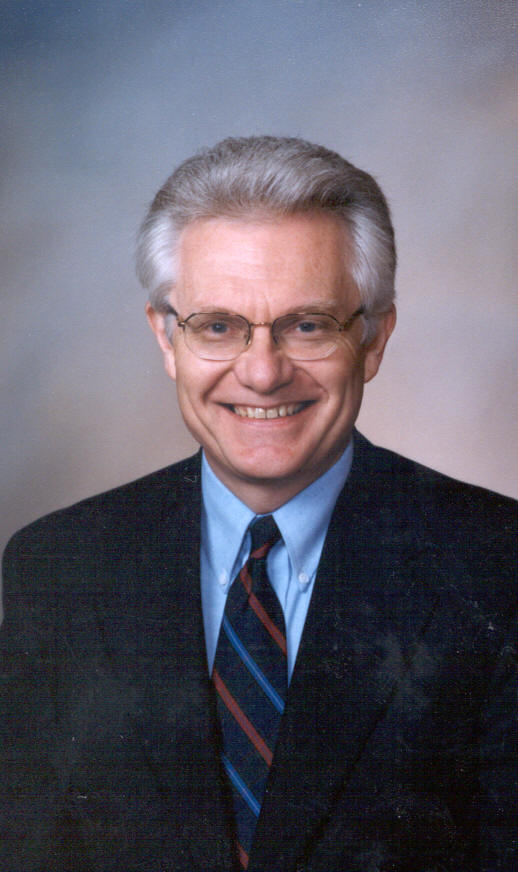
Longden is a John Wesley Fellow and associate professor of evangelism and discipleship emeritus, University of Dubuque Theological Seminary.